

Inventory sitting on the books is not neutral. Unsold diamonds tie up capital, distort stock positions, and limit flexibility across manufacturing, trading, and retail operations. In 2026, holding inventory because it is “not the right time” often costs more than selling it strategically.
Across the professional diamond trade in 2025, liquidity became a defining priority. Sellers increasingly focused on converting underperforming inventory into cash rather than carrying goods indefinitely in anticipation of marginal price improvements.
For the diamond industry, maximizing value is not about waiting for perfect conditions. It is about choosing the right mechanism to convert underperforming or non-core goods into liquidity while exposing them to real market demand.
Much of the inventory that reaches this liquidation stage consists of natural diamonds that are recycled or pre-owned. These goods may include stones that have not found buyers through other trading channels or inventory that needs to be liquidated for operational or balance-sheet reasons. When positioned correctly within a structured, competitive auction environment, they can still achieve strong market outcomes.
Identify What Should Be Liquidated
Not all inventory deserves the same strategy. Core goods that turn consistently should remain in circulation. Inventory that no longer aligns with buying programs, turnover expectations, or balance-sheet needs should be evaluated for liquidation.
Professional auctions are designed for this purpose, allowing the market to determine value for goods that no longer fit a company’s core buying or selling focus.
Melee
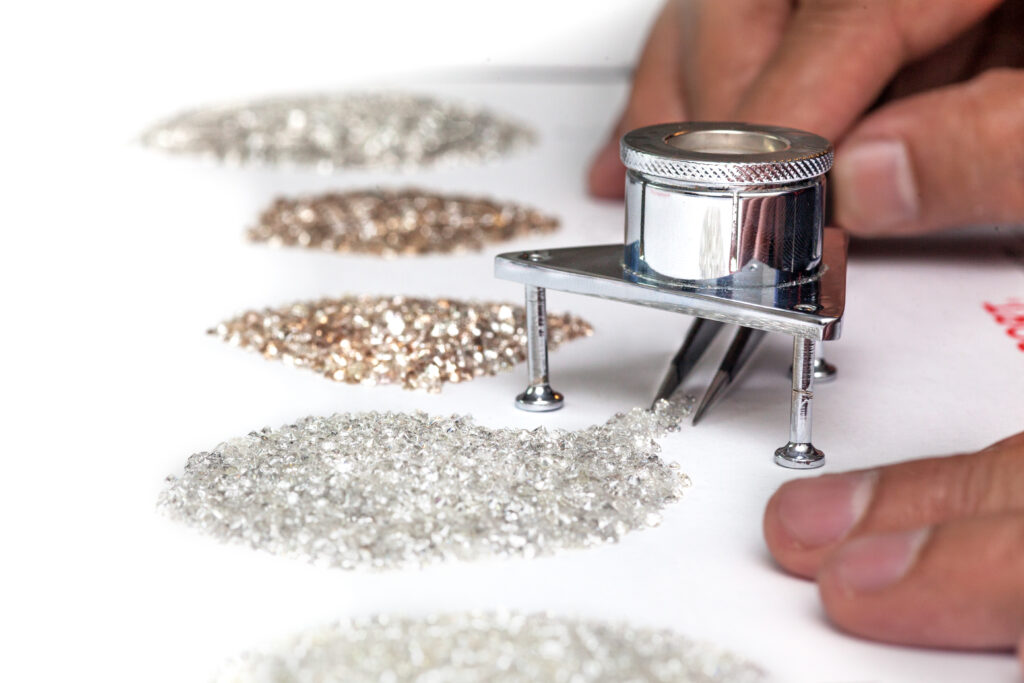
Melee inventory offered for liquidation often consists of recycled or pre-owned natural diamonds recovered from estate goods, older jewelry, or excess production. These parcels perform best at auction when they are properly sorted and clearly disclosed.
Buyers price melee based on yield, consistency, and speed of resale. Finely assorted parcels, calibrated goods, and clearly defined breakouts continue to outperform mixed or loosely sorted inventory. Parcels typically range from below 2.5 sieve through approximately 0.20 carats and may include broken goods or closeouts. Poor sorting or unclear quality leads buyers to price defensively.
Single Stones and Larger Polished Diamonds
Single stones entering the auction channel are often diamonds recycled from estate jewelry, retail returns, or legacy inventory. While not newly manufactured, they remain relevant to buyers focused on quality, make, and liquidity.
Stones from approximately 0.20 carats through 5 carats and above trade best when attributes align with current buying programs. Certified stones with current reports remain the most flexible. Fancy shapes and fancy colors can perform well when cut quality and proportions meet buyer expectations. Stones that fall outside these parameters often require repositioning to regain momentum.
Price for Liquidity, Not Hope
Pricing is the primary driver of successful liquidation. Inventory moves when pricing aligns with how professional buyers assess risk, comparables, and liquidity.
Professional buyers anchor decisions to structured pricing references and recent transaction data. In 2025, disciplined pricing aligned to market benchmarks consistently outperformed aspirational pricing in competitive selling environments. The Rapaport Diamond Price List remains a key reference point, not as a guarantee of value, but as a framework for positioning and negotiation.
Documentation Is Leverage
Documentation directly affects bidder participation. Up-to-date grading reports, clarity around treatments, and transparent disclosures reduce friction and widen buyer interest. For stones intended for resale, documentation directly influences how aggressively buyers are willing to bid.
Uncertified goods are not unsellable, but they are priced with caution. Sellers who approach documentation strategically gain a measurable advantage.
Use Auctions to Reach Qualified Global Buyers
Selling efficiently is not about finding buyers. It is about placing inventory where qualified buyers are already active.
Professional auction platforms consolidate demand from manufacturers, dealers, wholesalers, retailers, and secondary market specialists into a single competitive environment. By presenting goods to multiple vetted buyers at the same time, auctions allow pricing to be set by real demand rather than extended negotiations.
For many sellers, auctions serve as the next step when goods have not sold through traditional trading channels. In 2025, professionally run trade auctions consistently achieved strong sell-through as buyers sought vetted supply in transparent, controlled environments.
Why Rapaport Auctions Is Built for Liquidation
Rapaport Auctions was built to address a specific trade need: converting unsold professional inventory into liquidity while preserving value.
The platform deals exclusively in natural diamonds and adheres to established industry standards and benchmarks. This focus supports consistent valuation across recycled and pre-owned goods and aligns with professional buyer expectations.